 Annual Report 2022-2023 (6,746 KB)

Sharilyn J. Ingram
Chairperson, Canadian Cultural Property Export Review Board
344 Slater Street, 15th Floor, Suite 400
Ottawa, ON K1A 0E2
The Honourable Pascale St-Onge
Minister of Canadian Heritage
15 Eddy Street
Gatineau, QC K1A 0M5
Dear Minister,
It is an honour to present the Annual Report of the operations of the Canadian Cultural Property Export Review Board (CCPERB) for the fiscal year 2022-2023.
Over the past several years, CCPERB has continued to administer its duties under the Cultural Property Export and Import Act (the Act) while, like other federal organizations and citizens across the country, simultaneously negotiating the evolving context of the international COVID-19 pandemic. Formerly, that context involved important health precautions such as a reliance on technology to enable the Review Board to conduct its work remotely and in isolation. While certain precautions remained in place at the end of this past fiscal year, conditions had improved to a point where CCPERB was very pleased to be able to convene its first in-person meeting since 2020. It was a welcome and long- awaited occasion.
At the same time, Canada’s museums, galleries, libraries, archives, and other collecting institutions also started once again to welcome the public to access their cultural property collections, exhibitions, and events in person. This restored experience of cultural property in its immediate form—whether as fine art, or historical artefacts, or archival records, or any of the other myriad objects acquired by Canadian institutions—infused CCPERB with a renewed appreciation of our role within Canada’s system of cultural property protection. During 2022-2023, CCPERB reviewed 253 applications for certification of cultural property, representing approximately 1,346 objects or collections of objects having a total fair market value of approximately $60,636,003.
CCPERB also made six determinations on requests for the review of refused export permits, and received an additional two requests that will be reviewed during the 2023-2024 fiscal year.
CCPERB also continued to facilitate the certification process by updating its information resources and policy instruments. Most notably, at the request of applicants dealing primarily with the acquisition of archival cultural property, the Review Board contracted the services of an accredited monetary appraiser to draft general guidance on the effective monetary appraisal of archival cultural property. The result was an information resource entitled Strategies for the Monetary Appraisal of Archival Cultural Property, which is available on the CCPERB website together with other forms, guides, and information intended to clarify the Review Board’s policies and processes.
During 2022-2023, CCPERB also joined in the reflection being undertaken by many cultural organizations concerning the United Nations Declaration of the Rights of Indigenous Peoples (UNDRIP). We are continuing to examine how best to support UNDRIP in the context of the Review Board’s duties under the Act. The Review Board expects to issue an update on these reflections during the 2023-2024 fiscal year. In tandem with this work, CCPERB has taken the opportunity to look closely at its enabling legislation, making note of issues that were not contemplated when the Act was established almost fifty years ago. As Chair, I have made it a priority to engage with the Department of Canadian Heritage on ways the Act might be renewed to reflect contemporary values, best practices, and new forms of cultural property.
In short, the past fiscal year has been infused with a spirit of renewal, and I hope this spirit is reflected in the report that follows.
Sincerely,

Sharilyn J. Ingram, Chairperson
Canadian Cultural Property Export Review Board
The Canadian Cultural Property Export Review Board (CCPERB) is empowered under the Cultural Property Export and Import Act (the Act) to provide access to justice for applicants seeking review of refused cultural property export permits, as well as to administer provisions of the Act that support the ongoing acquisition, preservation, exchange, and access to cultural property within Canada. It performs a vital function through this work, enhancing Canada’s public collections and contributing to the preservation of cultural property of outstanding significance and/or national importance.
In this report, CCPERB presents an overview of its operations for the 2022-2023 fiscal year, featuring statistics to highlight key pieces of data that relate to CCPERB’s duties both in respect to the export of cultural property, and the certification of cultural property for income tax purposes.
In addition, this report also highlights CCPERB’s efforts to improve and clarify its policies and procedures, as well as milestones that exemplify its work throughout the fiscal year. This work has been done within the context of ongoing efforts to adapt operations to the imperatives of the COVID-19 pandemic and its aftermath.
The Canadian Cultural Property Export Review Board is an independent, quasi-judicial administrative tribunal established under the Cultural Property Export and Import Act. CCPERB meets four times per year in order to:
CCPERB reports to Parliament through the Minister of Canadian Heritage, but operates at arm’s length from its portfolio department to ensure the autonomy of its decision-making powers.
The Cultural Property Export and Import Act (the Act) establishes a system of controls for the export from Canada of cultural property, and supports the prevention of illicit international traffic in cultural property. The intent of the Act is to balance the rights of cultural property owners with the civic good derived from public access to objects of outstanding significance and of national importance.
Specific elements of the legislation are administered or enforced by other federal organizations, including:
As part of its system of protections, the Act establishes a Canadian Cultural Property Export Control List (Control List), which identifies objects or classes of objects, the export of which is necessary to control in order to preserve the national heritage in Canada. Subsection 4(2) of the Act identifies inclusions in the Control List as follows:
CCPERB rendered a determination in six (6) reviews for applications for an export permit and no (0) fair cash offer determination.
| Number of applications reviewed | 253 |
|---|---|
| Number of objects reviewed - Includes grouping of objects and Collections | 1,346 |
| Number of designated organizations - that submitted applications | 63 |
| Tax certificates issued to donors | 226 |
| Applications approved (Remaining applications were either refused by the Review Board or remained on hold at the end of fiscal year.) | 89% |
|---|---|
| Total fair market value determined | $61M |
| Certified at the proposed value | 53% |
| Certified at a higher value | 12% |
| Certified at a lower value | 24% |
| Put on hold or deferred | 10% |
| Refused | 1% |
| Objects of Fine Arts | 90% |
|---|---|
| Archival Material | 3% |
| Objects of Applied and Decorative Arts | 2% |
| Other | 5% |
The Cultural Property Export and Import Act describes the steps and criteria used to establish whether an object that is included in the Control List may be issued an export permit. When an application for a cultural property export permit is refused by a permit officer of the Canada Border Services Agency (based on the advice of an expert examiner), the applicant may request a review by CCPERB.
In these cases, CCPERB first must determine if the object is included in the Control List, and whether the object meets the criteria for “outstanding significance” and “national importance” set out in the Act, specifically:
If CCPERB determines that an object meets the above criteria, it will then form an opinion as to whether an institution or public authority in Canada might make a fair offer to purchase the object within six months after the date of its decision in the proceeding.
If so, CCPERB may establish a temporary export delay period of two to six months. These temporary export delay periods provide Canadian institutions with an opportunity to acquire significant cultural property facing export from Canada.
In 2022-2023, CCPERB reviewed six (6) applications for export permits and in three determinations, found the objects to be on the Control List, and of outstanding significance and national importance. Export delays were consequently established for these three objects.
In two of the other applications, the Review Board determined it did not have jurisdiction to hear the matters.
In the final application, the Review Board determined that while the object was on the Control List and of outstanding significance, it did not meet the threshold for national importance. Consequently, no export delay was imposed.
The decisions, in their entirety, are published on the CCPERB website.
Application No. : 0495-22-03-04-001
On March 18, 2022, Bonhams Canada requested a review of its application for an export permit to export the work Two Horses from the series “The Epic of the Martyr”, 1965, oil on canvas, by Kadhim Hayder.
Excerpt from the CCPERB decision issued May 20, 2022:
Despite the series not being necessarily “one of the earliest pieces of contemporary art in the Middle East”, the Object is a representative and fine example of the artist’s iconic series of paintings “The Epic of the Martyr”. In view of its political and metaphorical dimensions and Khadim Hayder’s modern approach to the series and his drawing from historical events and Iraqi popular culture, the Review Board concludes that public and scholarly access to the work would contribute to broadening the understanding of Middle East art, Iraqi modern art, Kadhim Hayder’s oeuvre in general, as well as this landmark series in particular.
Furthermore, sales evidence from the past ten years shows consistent interest for the paintings from the series “The Epic of the Martyr”, and that these attain the highest values among works by the artist. Sales evidence of other works by the artist have also consistently acquired more value. This increased interest attests to the importance of the artist and the interest of collecting, exhibiting, and studying his work as well as to the significance of paintings from this series in particular.
The Review Board accepts the Applicant’s representations that the Object does not have a connection to Canada or to Canadian heritage. An object’s national importance is not, however, dependent on a connection to Canada or to Canadian heritage. In Canada (Attorney General) v. Heffel Gallery Limited, the Federal Court of Appeal had for consideration whether the late painting Iris bleus created in France by the French impressionist painter Gustave Caillebotte met the criterion of national importance under the Act. In that case, the Court stated that the national importance criterion does not require that a given object “necessarily have a connection to Canada”. Rather, an object can meet the degree of national importance “even if the said object or its creator have no direct connection to Canada.” The Court explained that because paragraph 11(1)(b) of the Act “is an open- ended provision”, not a “mandatory recipe”, the Review Board may rely on factors related to the degree of value and importance of the object as well as its importance in the Canadian context in determining whether it is of national importance such that its loss to Canada would significantly diminish the national heritage.
The evidence shows that there are no artworks by Kadhim Hayder held in Canadian public institutions. If the Object were to be acquired by a public institution in Canada, it would be the only painting by the artist in a public collection.
In view of the importance of the oeuvre of Kadhim Hayder in Iraqi modern art, the art history of the Middle East, the modernist approach to recontextualizing the practice of mourning through poetry and theatrical re- enactments of the Battle of Karbala, in the series “The Epic of the Martyr”, which includes the Object, the lack of Hayder’s paintings in public collections in Canada, the excellent provenance of the Object, the Object’s contribution to an understanding of Canada’s diversity, specifically, the Iraqi and Middle Eastern diaspora, and Canadians’ understanding of Middle Eastern cultures, and Iraqi modern art, as well as the importance of acquiring such Object to advance research on art of the Middle East, and modern Iraqi art, in particular, the Review Board concludes that the Object is of such a degree of national importance that its loss to Canada would significantly diminish the national heritage.
The Review Board established a delay period of four months ending September 20, 2022. CCPERB directed the Canada Border Services Agency to issue an export permit after the delay period expired.
Application No.: 0395-22-03-18-001
On April 19, 2022, Landau Fine Arts requested a review of its application for an export permit to export the work Garten am Wasser, 1932, gouache and watercolour on paper on board, by Paul Klee.
Excerpt from the CCPERB decision issued June 15, 2022:
The Applicant does not dispute that the Object is of outstanding significance.
With respect to the Object’s aesthetic qualities and value in the study of the arts, the Review Board notes that the Object is a remarkable example of Klee’s oeuvre.
For the above reasons, the Review Board concludes that the Object is of outstanding significance for its aesthetic qualities and value in the study of the arts.
In view of the international importance of the oeuvre of Paul Klee in art history and the rarity of drawings and paintings by Paul Klee in Canada, the Review Board concludes that the Object is of such a degree of national importance that its loss to Canada would significantly diminish the national heritage.
The Review Board established a delay period of four months, ending October 15, 2022. CCPERB directed the Canada Border Services Agency to issue an export permit after the delay period expired.
Application No.: 0495-22-04-07-001
On March 28, 2022, Christie’s Canada Limited, the Applicant, requested a review of its application for an export permit to export the work Vue de Naples, 1881, oil on canvas, by Pierre-Auguste Renoir. However, on April 4, 2022, the Review Board informed the Applicant that it could not consider the request as it was filed late and it did not have the statutory authority to extend the 30-day filing deadline.
Subsequently, the Applicant again applied to the Canada Border Services Agency (CBSA), which refused to issue an export permit for the same reasons it had initially refused to issue one. On April 28, 2022, the Applicant then submitted a second request for review of the refused application to the Review Board, believing that this second refusal remedied the fact that the first request was late. The Review Board then received correspondence from CBSA, on May 20, 2022, indicating that the Second Notice of Refusal was issued in error and therefore invalid.
This correspondence was shared with the Applicant and Christie’s Canada Limited was provided the opportunity to make submissions on whether the Review Board could consider the merits of the second request for review. The Applicant provided no such submissions.
Excerpt from the CCPERB decision issued July 20, 2022:
The Review Board (…) observes that by considering a new application for an export permit before the requisite two years had elapsed, the CBSA permit officer effectively rendered meaningless the statutorily- mandated 30-day time limit imposed by subs. 29(1) of the Act, which the Review Board has previously determined it does not have the authority to extend. Proceeding with the Second Request for Review in the circumstances would have the same effect.
For these reasons, no request for review lies to the Review Board from refused permit application no. 0495-22-04-07-001, and the Review Board has no authority to consider its merits.
Application No.: 0495-22-05-04-002
On June 14, 2022, Heffel Gallery Limited requested a review of its application for an export permit to export the work Under the Well of the Great Wave Off Kanagawa, 1831, woodcut on paper, by Katsushika Hokusai. This request was received one day after the 30-day legislated deadline.
On June 17, 2022, the Secretariat to the Review Board requested from the Applicant written submissions on the Review Board’s authority to extend the deadline for initiating a review of a refused application for an export permit, which were subsequently received on June 30, 2022.
Excerpt from the CCPERB decision issued July 20, 2022:
The Review Board agrees that the Act provides it with significant procedural discretion as well as the power to make rules for the conduct of its proceedings under the Act. Section 28 of the Act indicates that the Review Board must “dispose of any matter before it as informally and expeditiously as, in its opinion, the circumstances and considerations of fairness will permit”. Moreover, s. 24 of the Act gives the Review Board the discretion to “make rules not inconsistent with th[e] Act for the conduct of its proceedings and the performance of its duties and functions…”.
However, the Review Board finds that ss. 24 and 28 of the Act do not provide a basis for the authority to extend time to initiate a proceeding. Those provisions simply formalize the Review Board’s power to control its own process.
Despite the unfortunate circumstances of this matter, the Review Board finds…that it does not have the authority to extend the 30-day deadline in subs. 29(1) of the Act for the initiation of a request for review of a refused export application.
Application No.: 1635-22-07-13-005
On August 14, 2022, Howard Roloff requested a review of his application for an export permit to export a pair of presentation silver armbands with George III engraved crest and a copper gilded George III military court gorget, circa 1825.
Excerpt from the CCPERB decision issued October 19, 2022:
The Applicant does not dispute that the Objects are of outstanding significance.
With respect to the Objects’ close association with Canadian history, the Review Board notes that the Objects are outstanding historical artefacts with a direct connection with Canadian history and British Colonial history.
The Objects, and the pair of arm bands specifically, are also outstanding examples of early 19th Century British silverware by a famous London family of silversmiths.
For the above reasons, the Review Board concludes that the Objects are of outstanding significance for their close association with Canadian history.
The evidence shows that there is a limited number (64) of silverware pieces by William Bateman or the Bateman family held in Canadian public institutions however, most of the items are silver forks, teaspoons, and spoons. (…) During the hearing, the Applicant referred to three sets of armbands in Canadian institutions, including one set from the Huron community in Quebec now housed in a national museum. If the Objects were to be acquired by a public institution in Canada, they would be rare additions to a public collection.
The association of the Objects with Chief John Aisance is based on several considerations well supported in the Sovereignty Gifts publication. Despite not being demonstrated by formal evidence, the acquisition directly from a descendant of Chief John Aisance makes a strong case for the importance of the Objects’ provenance. Such items were given to Indigenous Leaders who provided support during the War of 1812. The Objects therefore have a strong connection with the Ojibwa community and an important provenance.
In view of the historical importance of the Objects, and their rarity in Canada, contextual association with the Ojibwa community, and provenance, the Review Board concludes that the Objects are of such a degree of national importance that their loss to Canada would significantly diminish the national heritage.
Considering the historical importance of the Objects and the fact that institutions in Canada collect similar objects, and having regard to the low threshold, the Review Board is of the view that an institution or public authority might make a fair offer to purchase the Objects within six months of the Review Board’s determination in this matter.
The Review Board established a delay period of three months ending January 19, 2023. CCPERB directed the Canada Border Services Agency to issue an export permit after the delay period expired.
Application No.: 0428-22-10-12-001
On November 29, 2022, Sotheby’s Canada Inc. requested a review of its application for an export permit to export the work Aufstieg, 1924, watercolour and black ink on board, by Wassily Kandinsky.
Excerpt from the CCPERB decision issued March 23, 2023:
The Applicant contends that the Object does not have significant aesthetic qualities or value in the study of the arts. The Applicant relies on the fact that the Object is from a prolific period for the artist when he was teaching at the Bauhaus. As such, works from this period are not rare, nor is this Object an exemplar of the artist’s work on paper as compared to his earlier works created during his “Blue Rider Period” or later works created during his “Great Synthesis Period”. Furthermore, the Object has been handled and aged, would benefit from a restoration, and therefore cannot be considered in pristine condition.
The Review Board disagrees. Kandinsky was one of the most innovative artists of the first half of the 20th century. His oeuvre had an enormous influence on countless artists, including many Canadian artists. The Object is of outstanding significance for its aesthetic qualities. It is both innovative and significant in its composition, concept, execution and style and is a significant representative example of early 20th century abstractions. Although the Applicant has indicated that the Object is of outstanding significance for its aesthetic qualities.
It is both innovative and significant in its composition, concept, execution and style and is a significant representative example of early 20th century abstractions. Although the Applicant has indicated that the Object has condition issues including some fading of pigments, certain of those issues could be addressed on restoration. Although there is some colour fading, this fading is minimal and the colours largely remain fresh and vibrant.
Perhaps more important than its aesthetic qualities, the outstanding significance of the Object lies in its value in the study of the arts. Even though the Object is not from Kandinsky’s “Blue Rider Period” or his “Great Synthesis Period”, the work is representative of Kandinsky’s oeuvre in general and exemplifies early 20th century avant- garde abstraction. The significance of the Object for its value in the study of the arts is enhanced by the fact that, other than prints, works of Kandinsky are rare in Canadian collections. There is no opportunity to research or study a Kandinsky watercolour in Canada.
[…] the Object is not from Kandinsky’s “Blue Rider Period” or his “Great Synthesis Period” in which his works were most innovative. The Applicant describes the object as being among a secondary tier of works of the artist. Although the Object is of outstanding significance especially for its value in the study of the arts, the Object does not meet the threshold of such a degree of national importance that its loss to Canada would significantly diminish the national heritage.
The Object has the condition issues discussed above. It is not of high national significance in Canada, it is not of the first order of importance and it is not a treasure. The Object has been in a private collection in Canada since 1984. Its sole association with Canada is an exhibition at the Montreal Museum of Fine Arts in 1991. This does not elevate the Object to a treasure.
[…] the Review Board determines that the Object is included in the Control List and is of outstanding significance by reason of its aesthetic qualities and value in the study of the arts. However, the Review Board determined that the Object is not of such a degree of national importance that its loss to Canada would significantly diminish the national heritage. As a result, and in accordance with subsection 29(4) of the Act, the Review Board has directed a permit officer at the CBSA to issue an export permit forthwith in respect of the Object.
The Review Board therefore directed the Canada Border Services Agency to issue an export permit.
| Permit application Number | Description of cultural property | Date of Request for Review | Delay Expiry date (if applicable) | Outcome |
|---|---|---|---|---|
| 0495-22-03-04-001 | Kadhim Hayder, Two Horses, from the series “The Epic of the Martyr”, 1965, signed and dated, oil on canvas, 100 x 75 cm | March 18, 2022 | September 20, 2022 (four month delay period) | CCPERB directed the Canada Border Services Agency to issue an export permit after the delay period expired. |
| 0395-22-03-18-001 | Paul Klee, Garten am Wasser, 1932, signed “Klee”, gouache and watercolour on paper on board, 28 x 38 cm | April 19, 2022 | October 15, 2022 (four month delay period) | CCPERB directed the Canada Border Services Agency to issue an export permit after the delay period expired. |
| 0495-22-04-07-001 | Pierre-Auguste Renoir, Vue de Naples, 1881, signed “Renoir”, oil on canvas, 47.6 x 64.1 cm | April 28, 2022 | N/A | As stated in its decision, CCPERB determined no request for review lies to the Review Board. |
| 0495-22-05-04-002 | Katsushika Hokusai, Under the Well of the Great Wave Off Kanagawa, 1831, woodcut on paper, 24.1 x 37.1 cm | June 14, 2022 | N/A | As stated in its decision, CCPERB determined it does not have the authority to extend the 30-day deadline for the initiation of a request for review of a refused export application. |
| 1635-22-07-13-005 | Pair of Presentation Silver Armbands with George III Engraved Crest and One Copper Gilded George III Military Court Gorget, circa 1825 | August 14, 2022 | January 19, 2023 (three month delay period) | CCPERB directed the Canada Border Services Agency to issue an export permit after the delay period expired. |
| 0428-22-10-12-001 | Wassily Kandinsky, Aufstieg, 1924, watercolour and black ink on board, 31.7 x 22.8 cm | November 29, 2022 | No Delay | CCPERB directed a permit officer at the CBSA to issue an export permit forthwith in respect of the Object. |
During an export delay period established by CCPERB, an institution or a public authority in Canada has the opportunity to acquire cultural property objects or collections that are facing export from Canada. This institution or public authority may make an offer to purchase the cultural property that is subject to the delay, and the purchase price is negotiated between the export permit applicant and the organization.
A fair cash offer can occur where an offer from an organization to purchase cultural property that is subject is not accepted either the applicant or the organization, pursuant to section 30 of the Act, may submit a written request to CCPERB, asking that it determine an amount that would constitute a “fair cash offer to purchase.”
In instances where no request to determine a fair cash offer is submitted, CCPERB will, after the expiration of the delay period and on the export permit applicant’s request, direct a Canada Border Services Agency permit officer to issue an export permit forthwith in respect of the cultural property.
In 2022-2023, CCPERB made no (0) fair cash offer determination.
The Cultural Property Export and Import Act provides a system of incentives designed to not only help preserve cultural property of outstanding significance within Canada, but also to make it accessible to the public by offering tax certificates to donors or vendors who dispose of cultural property to a designated cultural institution.
In some cases, applications may be put on hold or otherwise deferred during a meeting, or they may be considered at more than one meeting. Applications may also be carried over from a previous fiscal year. The total number of applications reviewed represents the number of applications that received a decision during the fiscal year, and were not subsequently carried forward.
The Act uses the term “object(s)” to refer to all forms of cultural property disposed of, or proposed to be disposed of, to an institution or a public authority designated under the Act.
Objects may include, for example, archival cultural property, books and ephemera, scientific specimens, objects of natural history, fine art, and any other materials recognized as cultural property under the Act.
| Number | Percentage | ||
|---|---|---|---|
| Class 1 | Objects of Natural History (including fossils, minerals and other natural history objects) and Archeology | 4 | 1.57% |
| Class 2 | Objects of Material Ethnographic Culture | 4 | 1.57% |
| Class 3 | Military Objects | 0 | 0% |
| Class 4 | Objects of Applied and Decorative Arts | 6 | 2.35% |
| Class 5 | Objects of Fine Arts | 230 | 90.20% |
| Class 6 | Scientific or Technological Objects | 1 | 0.39% |
| Class 7 | Archival Material | 8 | 3.14% |
| Class 8 | Musical instruments | 2 | 0.78% |
| Class 9 | Audiovisual collections (film, video, new media, including digital) | 0 | 0% |
| Total* | 255 | 100% | |
*If an application contains objects of various classes, an applicant may identify more than one cultural property group for a single application. Consequently, the total number of cultural property classes identified by applicants (255) is higher than the total number of applications that received a decision (253).
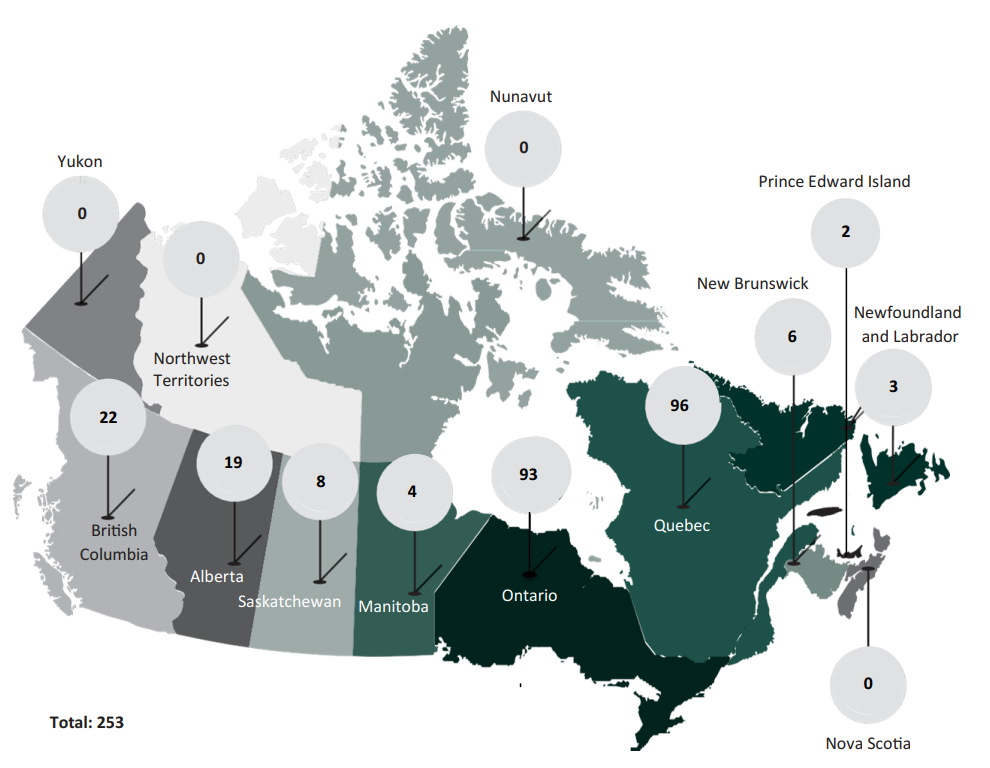
| Province/Territory | Number of applications |
|---|---|
| British Columbia | 22 |
| Alberta | 19 |
| Saskatchewan | 8 |
| Manitoba | 4 |
| Ontario | 93 |
| Quebec | 96 |
| New Brunswick | 6 |
| Newfoundland and Labrador | 3 |
| Prince Edward Island | 2 |
| Nova Scotia | 0 |
| Yukon | 0 |
| Northwest Territories | 0 |
| Nunavut | 0 |
| Total | 253 |
| Decision | Number | % | Total Fair Market Value | Approximate forgone Federal tax revenue |
|---|---|---|---|---|
| Certified at the proposed value1 | 134 | 52.96% | $30,553,908.53 | $8,860,604.47 |
| Certified at a lower value | 62 | 24.51% | $13,518,868.44 | $3,920,471.85 |
| Certified at a higher value | 30 | 11.86% | $16,563,326.38 | $4,803,364.65 |
| Put on hold or deferred2 | 25 | 9.88% | NA | NA |
| Refused3 | 2 | 0.79% | NA | NA |
| Inadmissible4 | 0 | 0% | NA | NA |
| Total | 253 | 100% | $60,636,003.35 | $17,584,440.97 |
1 Includes decisions where the average of more than one appraisal is taken as the fair market value.
2 If CCPERB needs additional information before making a decision, it will put the application on hold. CCPERB may also defer an application for administrative purposes. The total cited here represents the number of on hold or deferred files at the end of the fiscal year.
3 If CCPERB concludes that an object does not meet the criteria for outstanding significance, it will refuse the application.
4 If CCPERB determines that it has no jurisdiction to proceed with the review of an application (for example, if CCPERB is not satisfied that the donor or vendor was the owner of the object at the time of donation or sale), the application is deemed inadmissible.
As part of the certification process, CCPERB makes determinations with respect to the fair market value of the cultural property put forward for certification. Donors or vendors who do not agree with a CCPERB determination of fair market value may request a redetermination within 12 months of the date of CCPERB’s decision. Subsequently, donors or vendors who do not agree with the redetermination of fair market value may appeal the decision to the Tax Court of Canada within 90 days after the day on which the Cultural Property Income Tax Certificate is issued.
In 2022-2023, CCPERB did not receive any requests for redetermination. However, also in 2022-2023, three applications were filed with the Tax Court of Canada, stemming from Board Review determinations from the previous fiscal year.
When a redetermination is made, the original tax certificate is nullified and replaced by a new tax certificate.

Dana Claxton (b. 1959)
The Mustang Suite: Daddy's Gotta New Ride, 2008
Chromogenic print, AP1
121.9 x 152.4 cm
Collection of the Kamloops Art Gallery
Gift of the artist
Photo: Courtesy of the artist
Certified by CCPERB in 2022
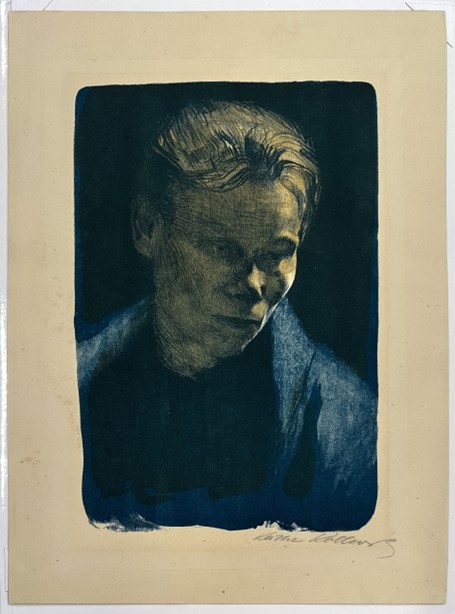
Käthe Kollwitz (1867-1945)
Brustbild einer Arbeiterfrau mit blauem Touch (Portrait of a Working Woman with Blue Shawl), 1903
Colour lithograph
46.6 x 35.7 cm
Collection of Remai Modern
Gift of Freda and Irwin Browns, 2022
Certified by CCPERB in 2022
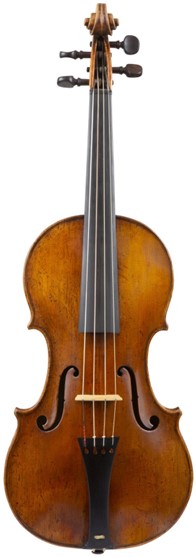
Sanctus Serafin (1699-1776)
Jeanne Lamon Santo Serafin violin, circa 1759
76 x 25.2 cm
Collection of the Canada Council for the Arts Musical Instrument Bank
Photo: Donna Santos
Certified by CCPERB in 2022
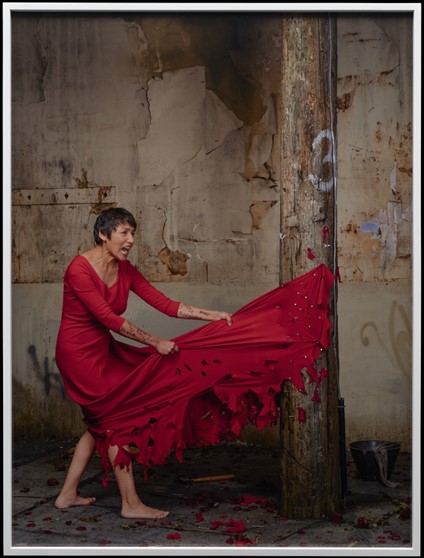
Rebecca Belmore (b. 1960)
witness from the series “nindinawenaganidog (all of my relations)”, 2017
Inkjet print on Epson Premium Luster paper, mounted to Dibond
142.2 x 106.7 cm
Collection of the Art Gallery of Ontario Photo: Courtesy of the artist
Certified by CCPERB in 2023

Life of a Craphead, artist duo of Amy C. Lam (b. 1983) and Jon McCurley (b. 1982)
King Edward VII Equestrian Statue Floating Down the Don, 2017
Sculpture, mixed media
Height: 271.8 cm, Width: 355.6 cm, Depth: 91.4 cm
Collection of the University of Toronto Art Centre
Photo: Yuula Benivolski
Certified by CCPERB in 2023
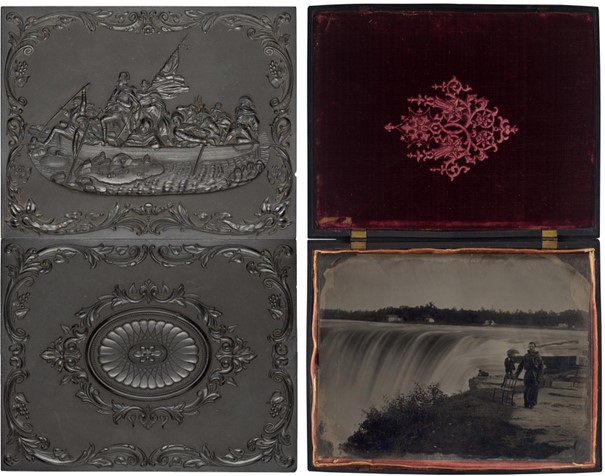
Littlefield, Parsons and Company; die engraved by Frederick B. Smith, Hermann Hartmann, and unidentified maker
Washington Crossing the Delaware (recto), Scroll/Geometric (verso), 1857–1866
Union whole-plate thermoplastic case
Image: Unidentified photographer, Untitled [Man at Niagara Falls], ca. 1858, ambrotype
Collection of the Toronto Metropolitan University, The Image Centre
Gift of Howard and Carole Tanenbaum, 2022
Certified by CCPERB in 2022
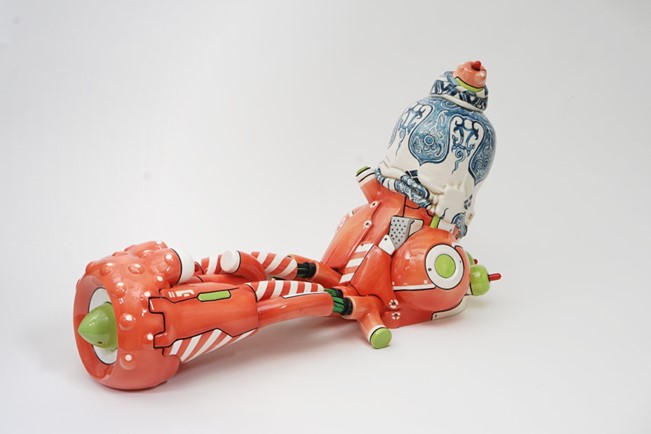
Brendan Tang (b. 1975)
Manga Ormolu Ver. 5.0-g, 2010
Ceramics, mixed media
40.6 cm x 73.7 cm x 27.9 cm
The Raphael Yu Collection, Gardiner Museum
Certified by CCPERB in 2022
At the onset of the COVID-19 pandemic, the Review Board quickly adapted its operations to allow it to continue its work remotely. As the pandemic evolved and health guidelines from federal, provincial, and municipal jurisdictions were updated, the Review Board, with proper safety measures in place, was able to resume its in-person quarterly meetings in June 2022. This return to in-person meetings also provided opportunities to meet directly with stakeholders to continue to inform CCPERB policies and procedures. Going forward, CCPERB will continue both in-person and remote meetings in order to benefit from the flexibility and efficiencies of these important approaches.
In response to feedback obtained from applicants dealing primarily with archival cultural property, CCPERB issued guidelines on the assessment and justification of fair market value of archival property, to offer support to the community in drafting monetary appraisals. These guidelines, Strategies for the Monetary Appraisal of Archival Cultural Property, were drafted by an accredited monetary appraiser, and are intended to be used in conjunction with the Guide for Monetary Appraisals, which provides information standards and a recommended format for monetary appraisals.
CCPERB is continually reviewing its guidance to applicants to ensure that it provides the most up-to-date and accurate information. Applicants are encouraged to visit the CCPERB website before submitting any application, to ensure that they receive the most current information to help them in the preparation of the applications.
During this fiscal year, CCPERB has examined how it might support the United Nations Declaration on the Rights of Indigenous Peoples (UNDRIP). CCPERB’s duties under the Cultural Property Export and Import Act are specific and limited, but the Review Board will endeavour to express support for this important Declaration in a way that is appropriate to its unique role within Canada’s system of cultural property protections. As part of its study, CCPERB met directly with representatives of organizations that have been proactive in their own support for UNDRIP. In March 2023, this included a presentation and dialogue with representatives of the Canadian Museum Association, following the publication of its report, Moved to Action: Activating UNDRIP in Canadian Museums.
CCPERB expects to issue a formal statement of support and identify meaningful actions in the 2023-2024 fiscal year. CCPERB encourages Canada’s collecting institutions to examine UNDRIP in the context of their respective collecting policies and to consider the Declaration where appropriate when applying for certification.
CCPERB consists of a chairperson and up to nine other members appointed by the Governor in Council on the recommendation of the Minister of Canadian Heritage.
Members are selected for their expertise in a range of fields relating to cultural property, including professional expertise gained at art galleries, museums, archives, libraries or other collecting institutions in Canada, or as dealers in or collectors of art, antiques or other objects that form part of the national heritage.
Specifically, section 18 of the Cultural Property Export and Import Act establishes membership as follows:
Under the Act, decisions must be made by no fewer than three members, at least one of whom was appointed under the institutional category, and at least one of whom was appointed under the dealer/collector category.

CCPERB Board Members:
From left to right: Paul Whitney, Jo-Ann Kane, Glen A. Bloom, Tzu-I Chung, Sharilyn J. Ingram, Laurie Dalton, Patricia Feheley, Madeleine Forcier
The following table identifies members with active terms during the 2022-2023 fiscal year.
| Member Category | Members in 2022-2023 | Current term |
|---|---|---|
| Public at large | Sharilyn J. Ingram Chair Retired academic and museum professional Grimsby, ON |
June 2020 – June 2023 |
| Glen A. Bloom Retired partner at Osler, Hoskin & Harcourt LLP Ottawa, ON |
March 2020 – March 2023 | |
| Collecting institution | Tzu-I Chung Curator of History, Royal BC Museum Victoria, BC |
May 2021 – May 2024 |
| Laurie Dalton Director/curator, Acadia University Art Gallery, Adjunct professor, Dept. of History and Classics, Acadia University Wolfville, NS |
January 2021 – January 2024 | |
| Paul Whitney Library and policy consultant, writer, book and art collector Vancouver, BC |
February 2021 – February 2024 | |
| Dealer/collector | Patricia Feheley Director, Feheley Fine Arts Toronto, ON |
May 2021 – May 2023 |
| Madeleine Forcier Director, Graff Gallery Montreal, QC |
May 2021 – May 2023 | |
| Jo-Ann Kane Collection Management Consultant Montréal, QC |
February 2022 – February 2025 |
CCPERB meets four times per year. At these meetings, the Review Board considers requests for the review of cultural property export permits, and applications for the certification of cultural property.
In 2022-2023, CCPERB resumed its in-person Board meetings on the following dates:
CCPERB published a Quarterly Report on its website, in order to provide the public with a statistical summary of formal business during each quarterly meeting.
The Secretariat to CCPERB is part of the Administrative Tribunals Support Service of Canada (ATSSC). The Secretariat supports CCPERB and its applicants by:
CCPERB’s offices are located in the National Capital Region, the traditional unceded territory of the Algonquin Anishinaabe people.
For questions about CCPERB operations or information contained in this Annual Report, please contact:
Canadian Cultural Property Export Review Board
344 Slater Street, 15th Floor, Suite 400
Ottawa, Ontario K1A 0E2
